
Recommended Posts


Television Review: The Long Con (Lost, S2X13, 2006)
0 comments
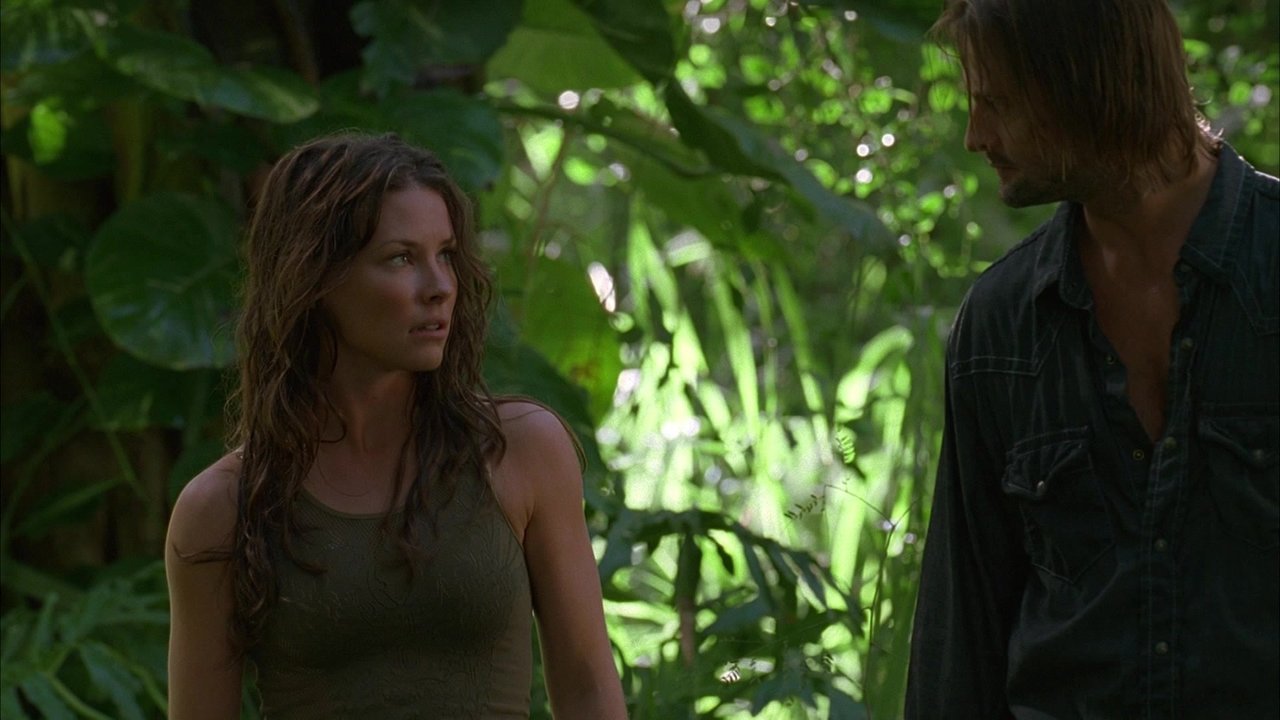
The Long Con (S0213)
Airdate: 8 February 2006
Written by: Leonard Dick & Steven Maeda
Directed by: Roxann Dawson
Running Time: 44 minutes
By the middle of its second season, Lost had settled its survivors into a new status quo. The discovery of the Swan Station provided much-needed shelter and supplies, while the tentative truce with the Others, however uneasy, had temporarily removed the immediate external threat. For a serialised drama built on perpetual mystery and conflict, this relative stability posed a narrative challenge: something had to emerge as an alternative source of dramatic tension. The solution, as explored in The Long Con (S2E13), was to turn the lens inward, to the simmering resentments and power struggles within the camp itself. This episode puts that concept to relatively good use, providing a sharp new twist to the social dynamic while once again delving into the troubled background of one of the series’ most controversial and compelling characters, Sawyer.
The main plot stems from what is presented as one of Jack Shephard’s less well-considered leadership decisions. In an effort to organise a defence force, he tasks the volatile former police officer Ana Lucia Cortez with training a militia. This idea is fraught from the outset, particularly when it centres on control of the Swan Station’s armoury. The survivors’ prior experience with Ana Lucia—namely, her accidental shooting of Shannon—suggests that putting a gun in her hands can have tragic consequences. John Locke, ever the pragmatic survivalist, has already foreseen the danger. He informs Jack that he has changed the combination to the armoury door, which also houses the station’s precious medical supplies. Among these supplies are the painkillers Jack confiscated from Sawyer, a point of contention that establishes the first thread of the episode’s central conflict. Sawyer’s grumbling about this confiscation seems a minor irritation, but it is the catalyst for everything that follows.
The tension escalates dramatically when Sun is violently attacked and abducted in her garden. She is later found unconscious, and the camp, gripped by fear and paranoia, immediately assumes the Others have broken the truce. A mob mentality takes hold, with many demanding immediate access to the guns for defence. However, Sawyer and Kate, observing the panic with cooler heads, become convinced the Others are not responsible. Sawyer posits that the attack was a con, orchestrated solely to create a pretext for someone to seize the weapons. Kate, understanding the gravity of this, sends Sawyer to the Hatch to warn Locke that an armed mob is on its way. What unfolds is a masterful piece of narrative misdirection. When Jack and Jin arrive at the Swan to retrieve the guns for the ‘greater good’, they find the armoury stripped bare. Jack’s assumption is immediate and personal: Locke has betrayed him and hidden the guns for his own purposes. Their confrontation on the beach is interrupted by gunfire from Sawyer, who emerges as the true puppet master. With a chilling, self-satisfied smirk, he declares himself the “new sheriff in town.” Kate pieces together the truth: the entire incident, including Sun’s attack, was Sawyer’s ‘long con.’ His unapologetic confession to her—“You run, I con”—perfectly encapsulates his cynical worldview. The final layer of the scheme is revealed with Charlie’s involvement; motivated by a bitter desire for revenge against Locke for his earlier beating and shunning, he was Sawyer’s accomplice in attacking Sun and stealing the arsenal.
This present-day machination is brilliantly mirrored and contextualised by a flashback centred solely on Sawyer. We see him in the midst of a classic ‘long con,’ involving the attractive divorcee Cassidy Phillips (Kim Dickens). In a surprising moment of vulnerability, Sawyer confesses his con artist career to Cassidy but claims his attraction to her is genuine. As a form of penance, he begins teaching her the tricks of his trade. The meeting with his partner, Gordy (Kevin Dunn), reveals the brutal truth: Cassidy was always Gordy’s mark, worth $600,000. Faced with Gordy’s threats, Sawyer appears to have a crisis of conscience, sending Cassidy to safety with a duffel bag he claims contains the money. The flashback’s devastating conclusion reveals the quintessential Sawyer: having seemingly chosen a person over a score, he reveals he switched the bags and took every dollar for himself. This backstory does more than explain his methods; it underscores his profound self-loathing and his belief that trust and decency are weaknesses to be exploited. His actions on the Island are not an anomaly but the continuation of a lifelong pathology.
While intensely focused on this central plot, the episode deftly weaves in a minor subplot that provides both haunting atmosphere and significant foreshadowing. Sayid, having repaired a radio from the Arrow Station, uses it to search for signals. With Hurley, he picks up a clear broadcast of Glenn Miller’s ‘Moonlight Serenade.’ Sayid offers a technical explanation—the signal, while strong, could be bouncing off the ionosphere from a great distance. Hurley’s offhand retort, “Or another time,” followed by a nervous “Just kidding,” lands with profound weight. This exchange is quietly revolutionary. For the first time in the series, the idea of time distortion or travel is explicitly floated as a possible element of the Island’s mystery. It transforms a moment of nostalgic respite into something deeply unsettling.
This subplot also functions as a potent cultural reference. Glenn Miller’s own disappearance in 1944 during a flight over the English Channel remains one of the great unsolved mysteries of the twentieth century. The parallel to Oceanic Flight 815 is unmistakable, layering the survivors’ experience with a real-world historical echo of vanishing without a trace. It’s a subtle, intelligent touch that enriches the episode’s thematic texture.
Directed with assured pacing and a keen eye for tense close-ups by Roxann Dawson—herself famous as B’Elanna Torres on Star Trek: Voyager and by then an accomplished television director—The Long Con is a pivotal instalment. It successfully redirects the series’ conflict engine from external threats to internal treachery, with Sawyer’s devastating gambit shattering the fragile trust binding the camp. The episode argues that in an environment where the rules of civilisation have broken down, the greatest danger may not be the unknown in the jungle, but the con man in your midst, waiting for the perfect moment to play his hand. It is a harsh, compelling lesson that redefines the power dynamics of the beach and sets a darker, more cynical tone for the season to come.
RATING: 7/10 (+++)
==
Blog in Croatian
Blog in English
InLeo blog
LeoDex:
InLeo:
Hiveonboard:
Rising Star game:
1Inch:
BTC donations: 1EWxiMiP6iiG9rger3NuUSd6HByaxQWafG
ETH donations: 0xB305F144323b99e6f8b1d66f5D7DE78B498C32A7
BCH donations: qpvxw0jax79lhmvlgcldkzpqanf03r9cjv8y6gtmk9

Comments